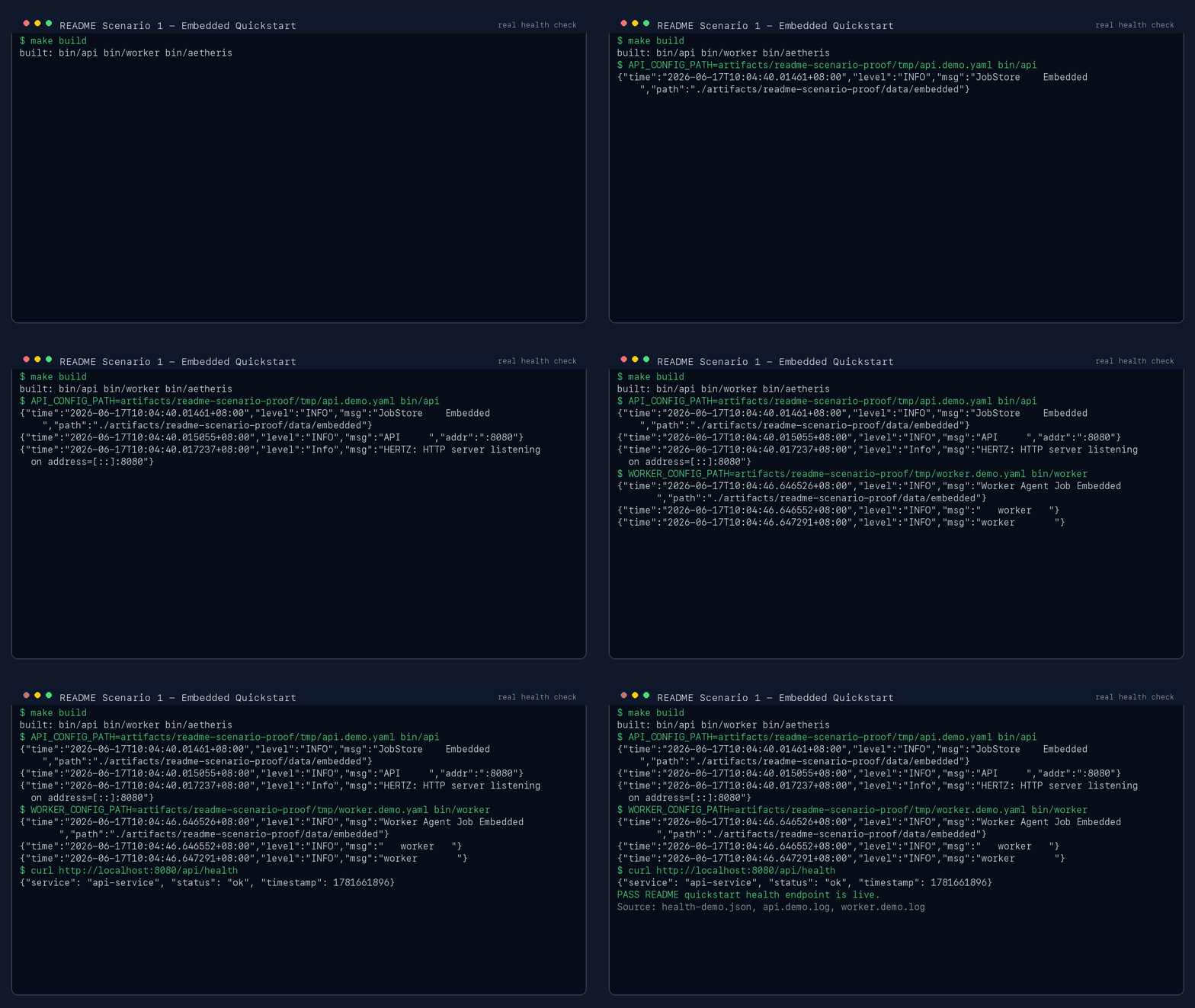
Embedded quickstart
Starts the embedded API and Worker, then verifies
/api/health returns a live runtime response.
Aetheris wraps long-running agents in durable execution semantics — crash recovery, at-most-once side effects, replayable audit trails — without forcing you to rewrite your stack. Now with embedded framework bridges for 8+ Go agent frameworks and intelligent routing advisor.
Happy-path code runs fine in demos. In production, workers crash mid-run, retries duplicate payments, and nobody can prove what the agent actually did.
Aetheris sits between your agent and the outside world. You submit work via HTTP or Go SDK; the runtime handles durability, scheduling, and side-effect safety.
Aetheris is built around a small set of guarantees that compose correctly. Each one has a formal definition in the runtime spec.
When a worker dies, the scheduler's lease fencing detects the timeout and assigns the job to the next available worker, which resumes from the last committed checkpoint. Zero manual intervention required.
Every tool invocation is recorded in an immutable ledger before execution. On retry, the runtime checks the ledger — if the call already happened, the recorded result is returned without re-executing.
Every state transition is appended to a durable event log with full causality. Any job can be replayed step-by-step for debugging, compliance review, or post-incident root cause analysis.
From intelligent routing to embedded framework bridges — Aetheris provides the building blocks for sophisticated agent orchestration.
Integrate 8+ Go agent frameworks directly as TaskGraph nodes. LangChainGo, LangGraphGo, Google ADK, Firebase Genkit, and more run natively inside the Aetheris runtime with full checkpoint support.
Intelligent capability routing based on content analysis. The RoutingAdvisor interface enables WisePick-style dynamic tool selection with durable evidence recording for replay safety.
Expose Python LangGraph compiled graphs as Aetheris-compatible HTTP agents. Use embedded manifest mode for step-level control or black-box mode for quick migration.
Native support for Server-Sent Events streaming agents. The sse_legacy protocol enables integration with platforms like superagent-base for real-time token streaming.
Clone, start the embedded runtime, and submit your first durable job. No cloud account, no Kubernetes, no configuration files required.
git clone https://github.com/Colin4k1024/Aetheris.git
cd Aetheris
make run-embeddedcurl http://localhost:8080/api/healthcurl -X POST http://localhost:8080/api/agents/default/message \
-H "Content-Type: application/json" \
-d '{"content": "Summarize the top 3 HN stories"}'# configs/agents.yaml
agents:
my_agent:
type: "external_http"
description: "My agent (JSON mode)"
external:
url: "http://localhost:9000/invoke"
timeout: "30s"
token_env: "MY_AGENT_API_KEY"
# SSE-streaming agent (e.g. superagent-base)
streaming_agent:
type: "external_http"
external:
url: "http://localhost:8888/api/v1/chat/stream"
timeout: "120s"
protocol: "sse_legacy"
agent_id: "research-agent"# Python example (any HTTP server works)
from flask import Flask, request, jsonify
app = Flask(__name__)
@app.route('/run', methods=['POST'])
def run():
goal = request.json['goal']
return jsonify({'answer': f'Done: {goal}'})curl -X POST http://localhost:8080/api/agents/my-agent/message \
-H "Content-Type: application/json" \
-d '{"content": "your goal here"}'pip install aetheris-sdkfrom aetheris import Client
client = Client("http://localhost:8080")
job = client.submit(
agent="default",
message="Summarize the report",
)
print(job.id, job.status)trace = client.trace(job.id)
for step in trace.steps:
print(step.name, step.status, step.duration_ms)These recordings come from the embedded quickstart and the external_http batch demo, with raw job, event, and trace evidence checked into the repository.
Starts the embedded API and Worker, then verifies
/api/health returns a live runtime response.
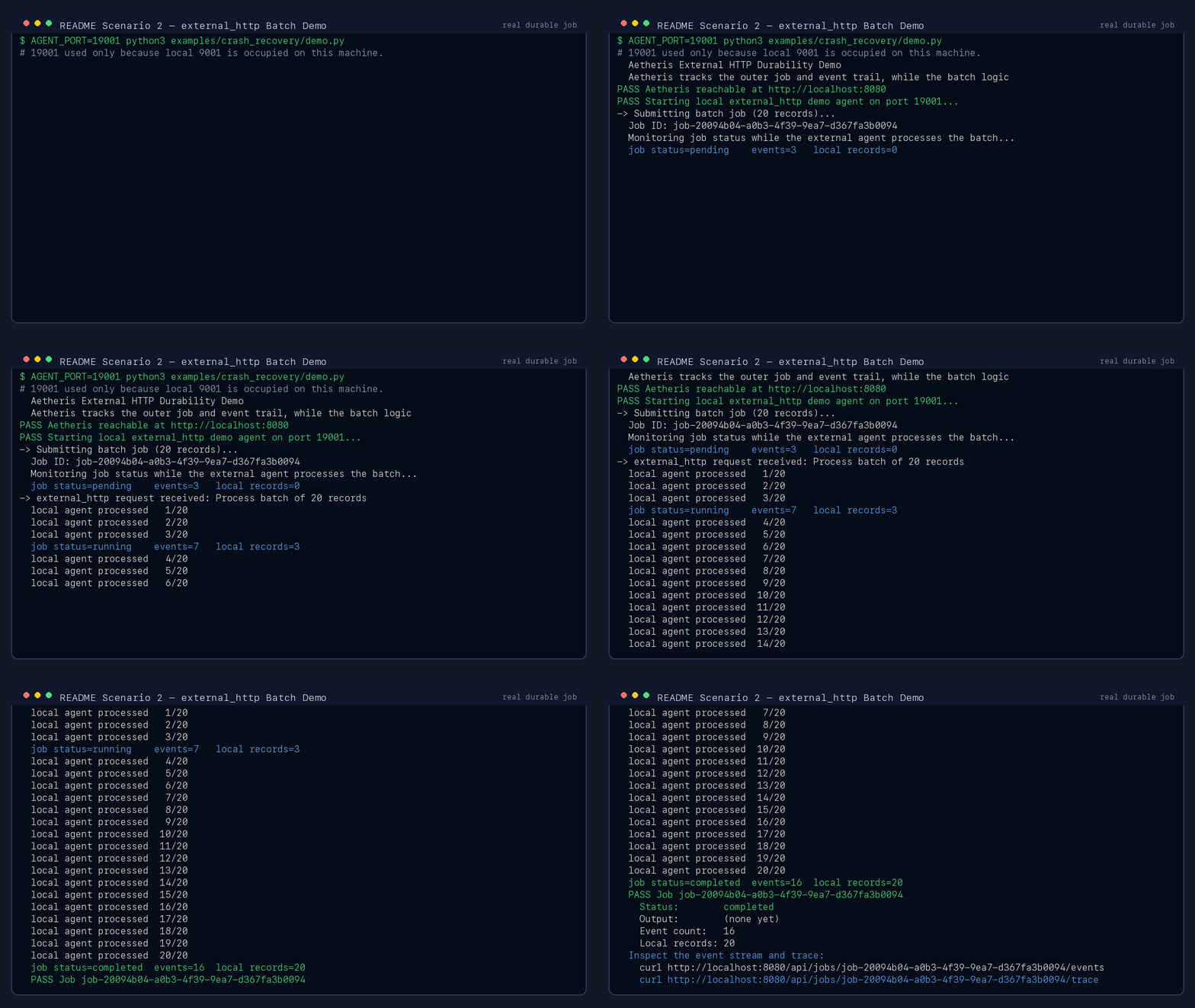
Submits a durable black-box HTTP agent job and shows the external service processing 20 records through completion.
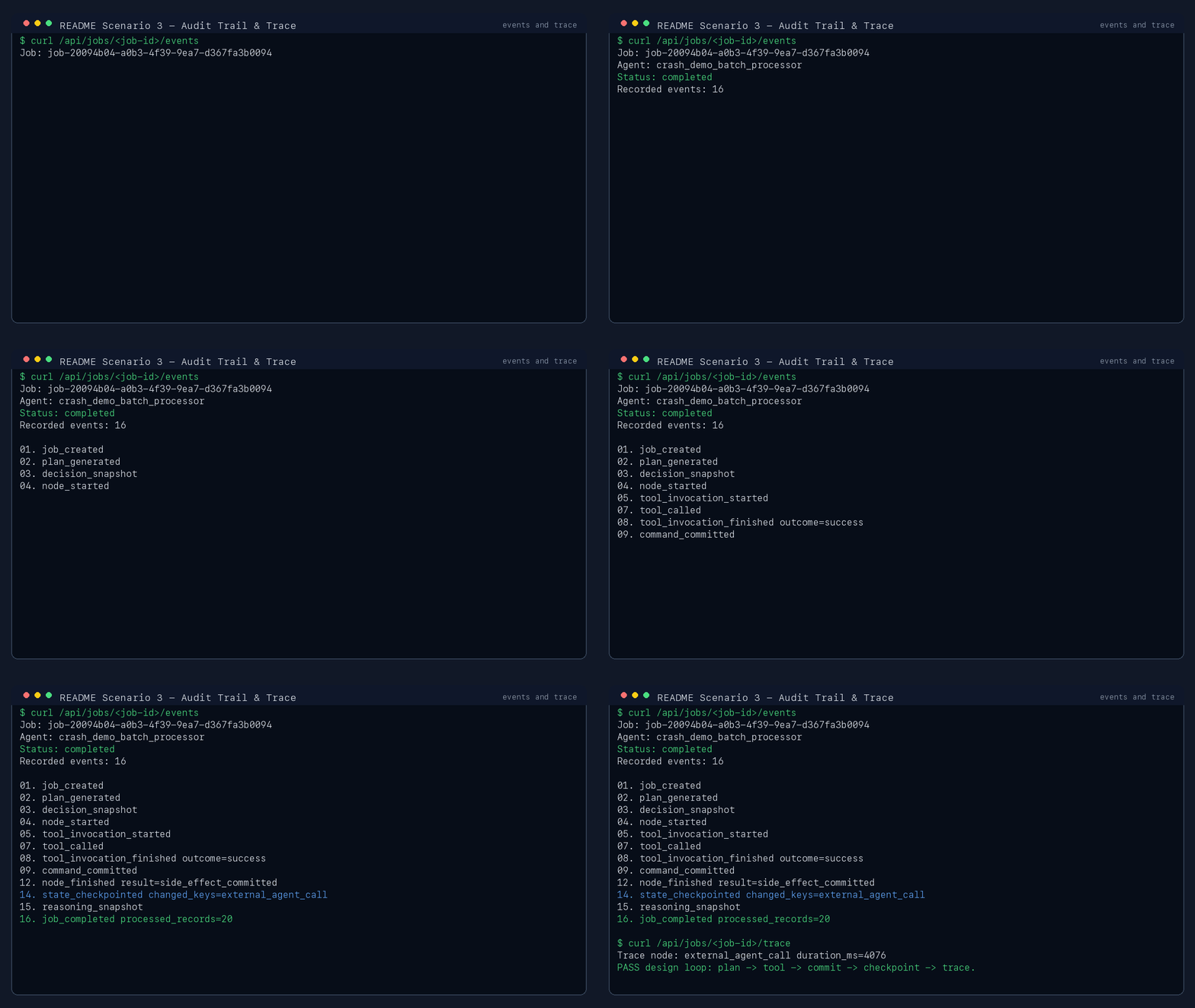
Shows the recorded event chain from plan generation to tool commit, checkpoint, reasoning snapshot, and final job completion.
Bring your existing agent written in any language. The external HTTP boundary means Aetheris is language-agnostic by design.
This page is being served by a running Aetheris instance. These shortcuts reach it directly.
From the five-minute quickstart to formal execution semantics — the full picture is in the docs.